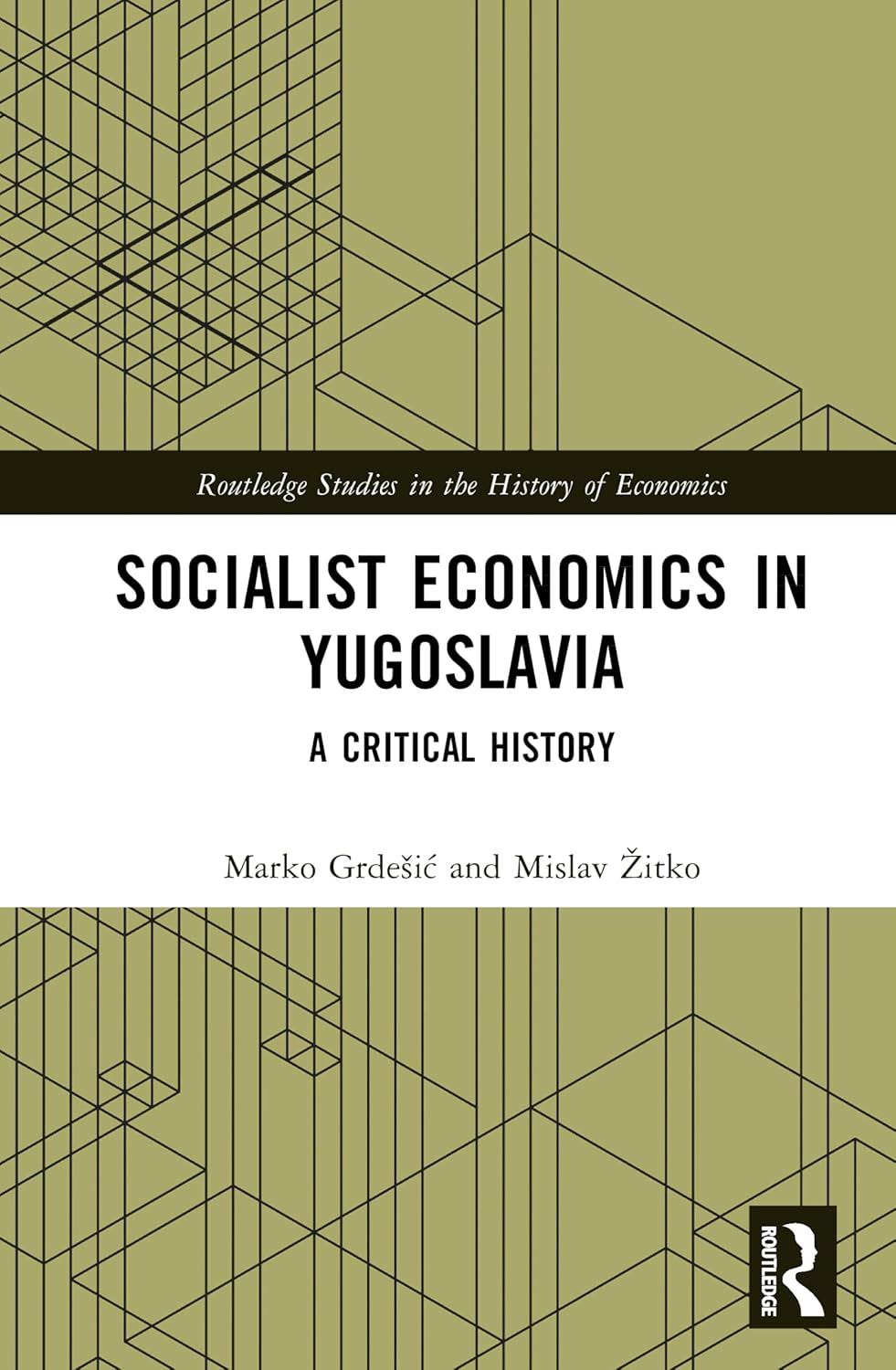
Marko Grdešić and Mislav Žitko, Associate Professor and Assistant Professor respectively at the University of Zagreb, Croatia, published in October 2025 the book Socialist Economics in Yugoslavia: A Critical History as part of the book series Routledge Studies in the History of Economics. In this book, Grdešić and Žitko critically examine the history of workers’ self-management in Yugoslavia from 1948 to the late 1980’s as well the theories developed by Yugoslav economists in order to assess their relevance for contemporary debates around democratic economic planning.
A summary of the book can be found below:
This book presents a critical history of Yugoslav socialist economics, from its inception in the late 1940s to its dissolution in the late 1980s. After the dramatic break with the Soviet Union in 1948, Yugoslavia found itself in urgent need of a third way: A socialist trajectory which would not resemble the Soviet model nor succumb to the imperatives of capitalist modernization. This monumental historical task resulted in the gradual constitution of the system of socialist self-management.
This book is the first to provide a systematic response to key questions about this specifically Yugoslav form of socialist economics: How did it develop? How was it consolidated into a productive and influential academic discipline? What were the theoretical concerns and empirical procedures used by economists in order to create a modern scientific discipline and advance the cause of socialist Yugoslavia? And finally, how did this body of work enter a terminal crisis and disappear simultaneously with the country itself? Even given its failure, socialist Yugoslavia constitutes one of the more important and sustained twentieth-century attempts at building socialism. Thus, the Yugoslav way of thinking remains relevant for contemporary topics such as economic democracy, comparative economic systems and post-capitalist economic models.
You can find out more about the book here.